Rate Adaptation with GMP
GMP adapts an Ethernet client's rate to FlexO by adjusting the allocation of client data and stuffing, while preserving client data and order at the receiver.
Read post HardMatrix
GMP adapts an Ethernet client's rate to FlexO by adjusting the allocation of client data and stuffing, while preserving client data and order at the receiver.
Read postCompact world models address physical prediction, opening a path to autonomous systems that can make decisions at the edge.
Read postGMP adapts an Ethernet client's rate to FlexO by adjusting the allocation of client data and stuffing, while preserving client data and order at the receiver.
Read postCompact world models address physical prediction, opening a path to autonomous systems that can make decisions at the edge.
Read post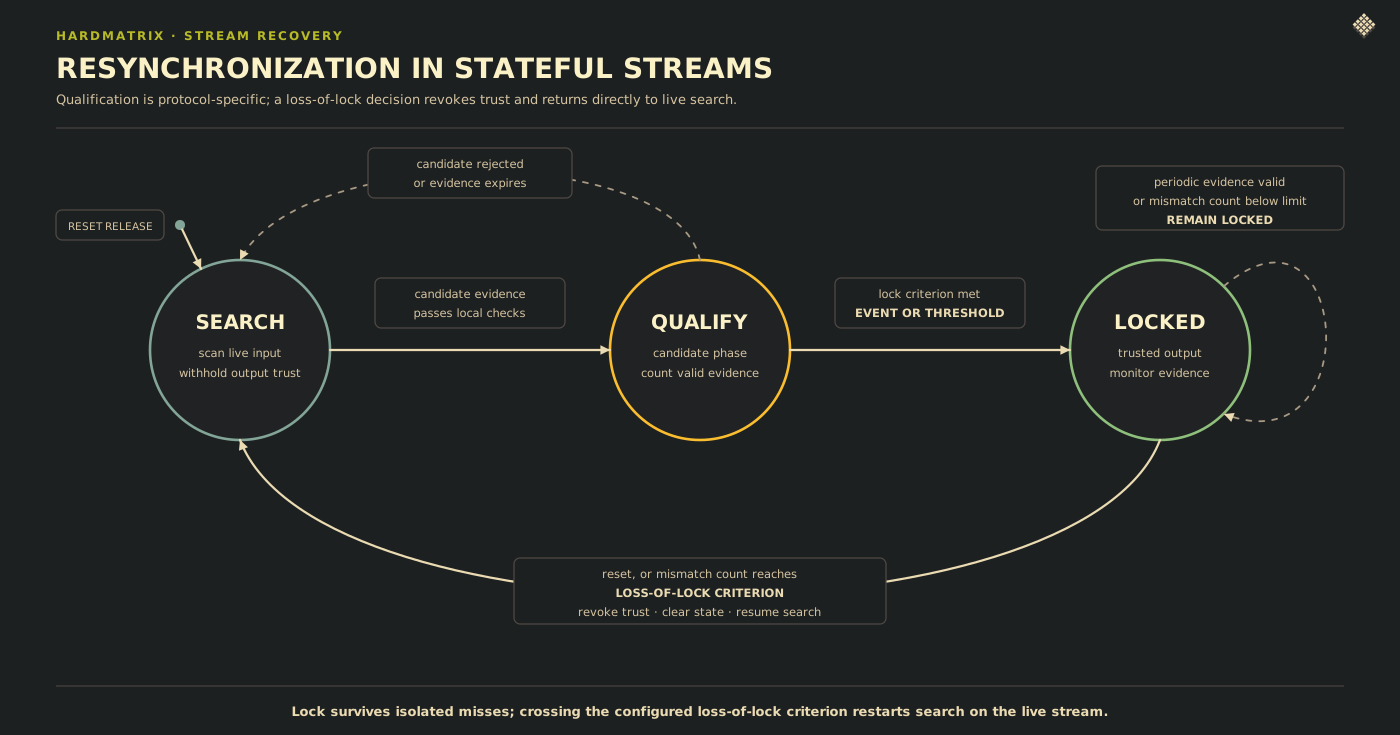
When framing state becomes untrustworthy, recovery must invalidate stale interpretation, preserve the surrounding stream contract, and re-establish trust within a measurable bound.
Read post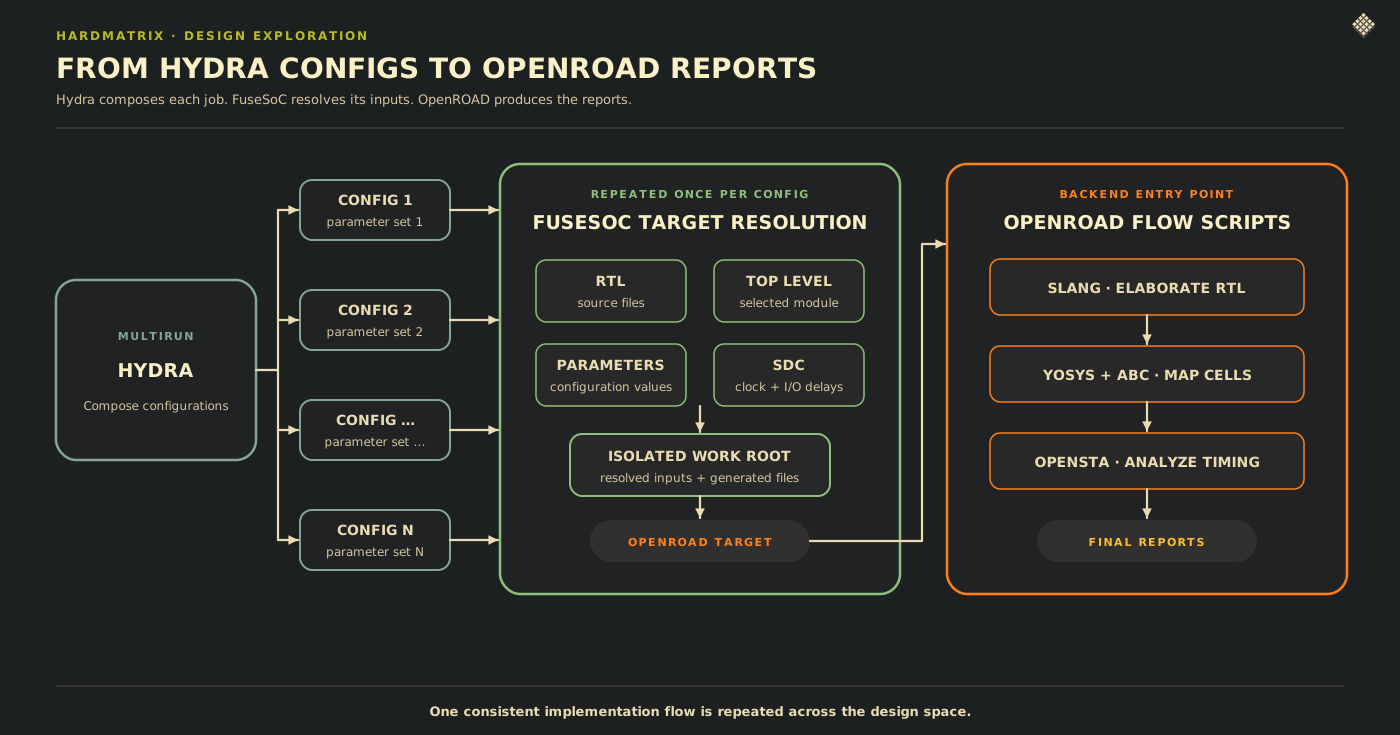
The reproducible workflow behind the area and timing measurements from our previous experiment.
Read post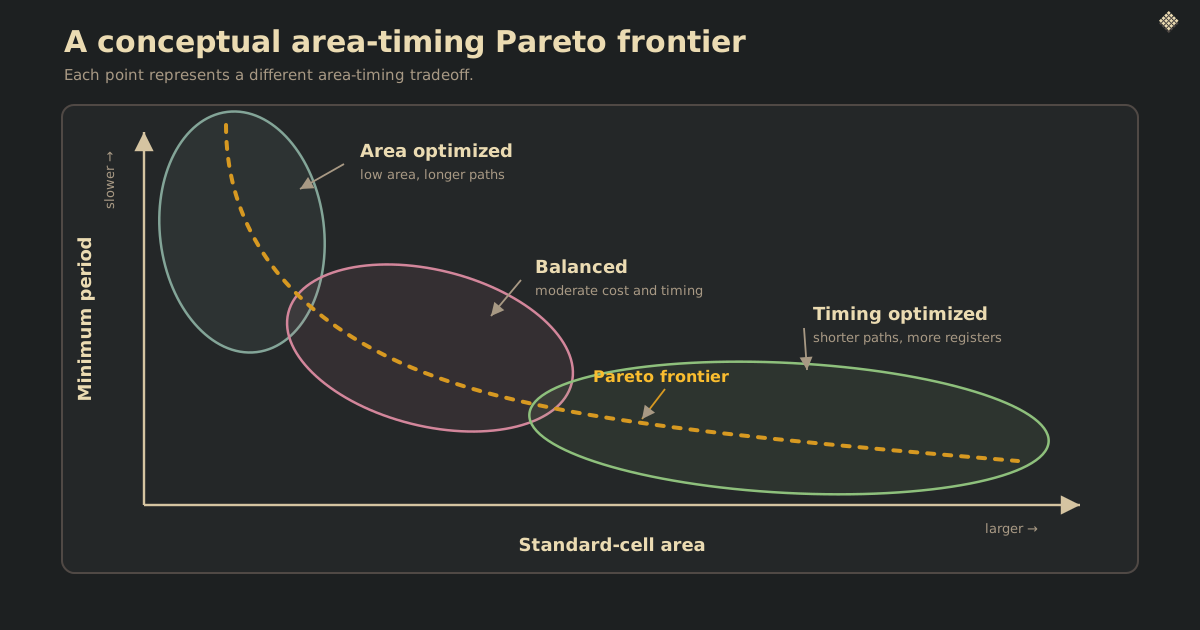
Measuring area and timing tradeoffs across hardware designs using open source tools.
Read post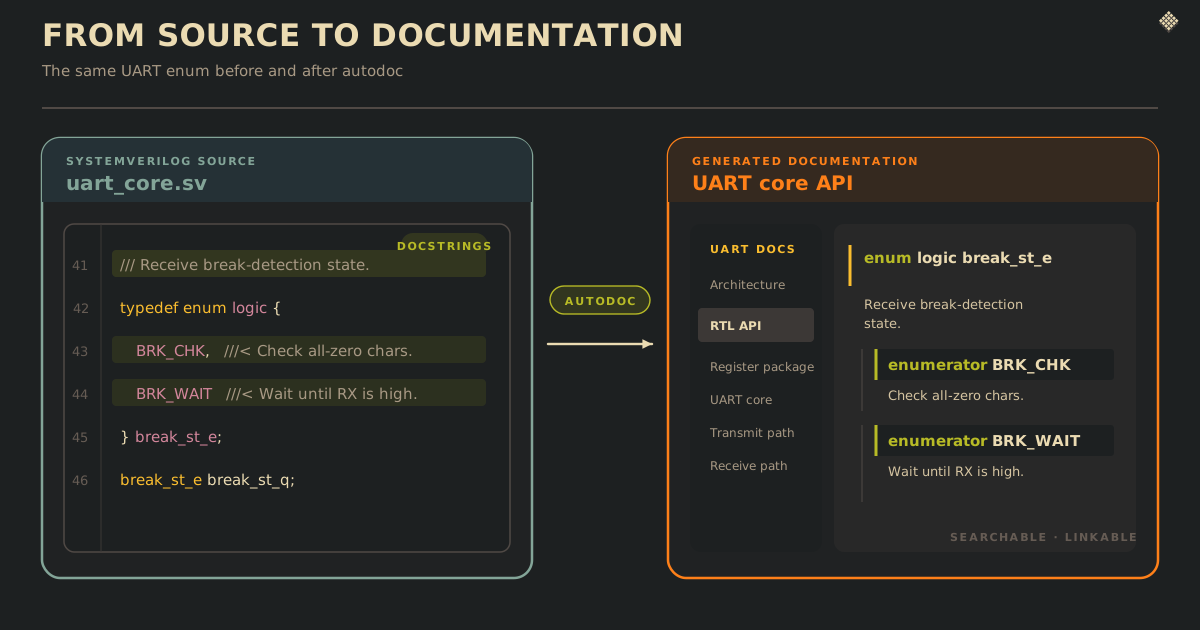
With sphinx-svdomain, SystemVerilog source and docstrings become clear, linked documentation that is easy to browse and rebuild as the RTL changes.
Read post
Hardware APIs deserve searchable documentation with reliable links between declarations. We are releasing sphinx-svdomain to help close that gap.
Read post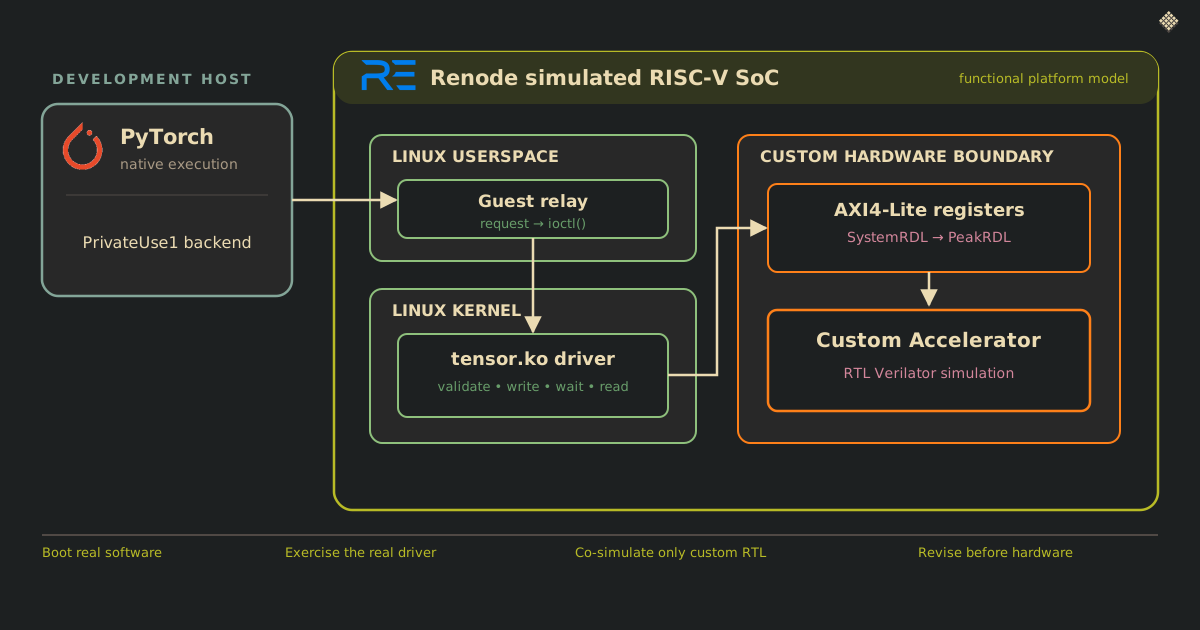
An open-source full-system workflow that connects PyTorch, a Linux driver, and Verilated RTL inside a Renode-simulated SoC before physical hardware is ready.
Read post
Custom AI hardware creates value when repeated model operations can be moved into workload-specific datapaths for better latency, power, and integration. This post shows a small PyTorch-facing prototype that connects ordinary tensor code to that hardware path.
Read post
A phase-by-phase RTL workflow that keeps modeling, generation, verification, synthesis, and timing open without closing the door to commercial backends.
Read post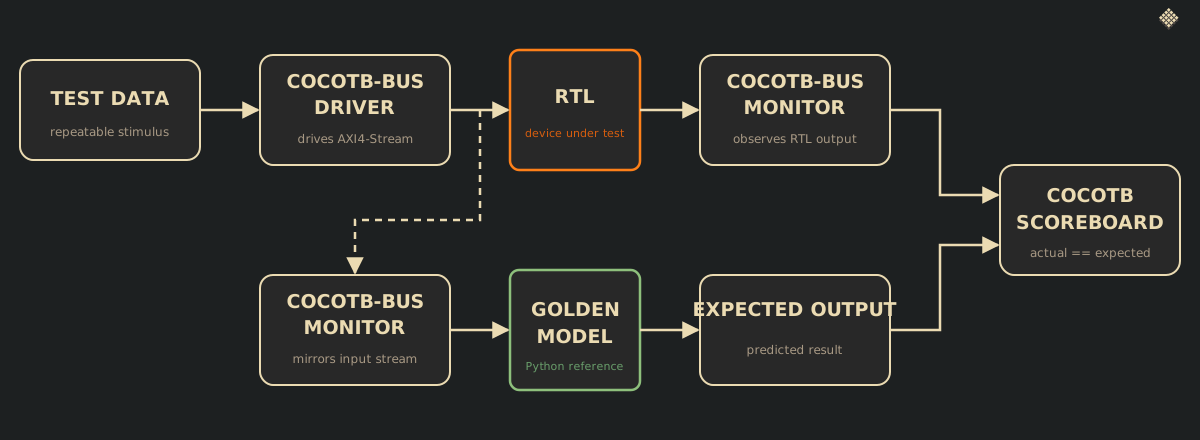
A lightweight verification workflow for building RTL with golden models, standard streaming interfaces, and composable blocks.
Read post
Many “serial feedback” circuits look inherently sequential, but if their state update is linear over a finite field, we can raise the transition matrix to process many input symbols per clock.
Read postNo articles found.